

Research theme 3
Converting Recycled Materials into Value-Added Products
Theme leaders

Prof Chun-Xia Zhao
(UofA)

Prof Debra Bernhardt
(UQ)

Background
The value of solar panel recycling lies not only in recovering materials but also in ensuring their effective reuse. Without high-value applications, recycled products risk becoming low-grade or underutilised. RT3 focuses on converting recycled silicon, glass, and metals into reliable, value-added products that can re-enter key industries. By identifying pathways for reusing these materials, this theme ensures that PV recycling contributes to both economic value creation and environmental sustainability.
Aims
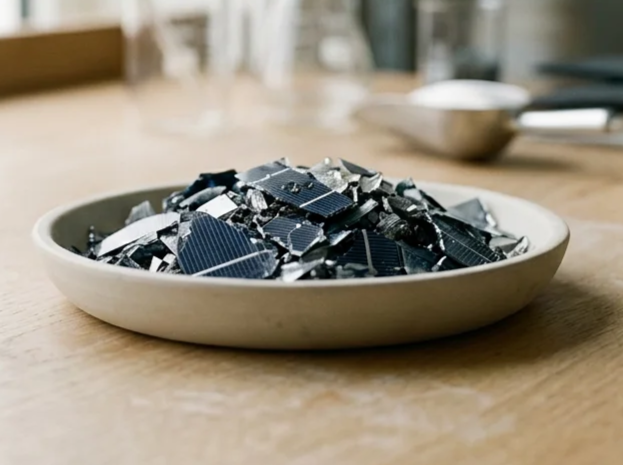
Recycled Silicon (Si) Applications
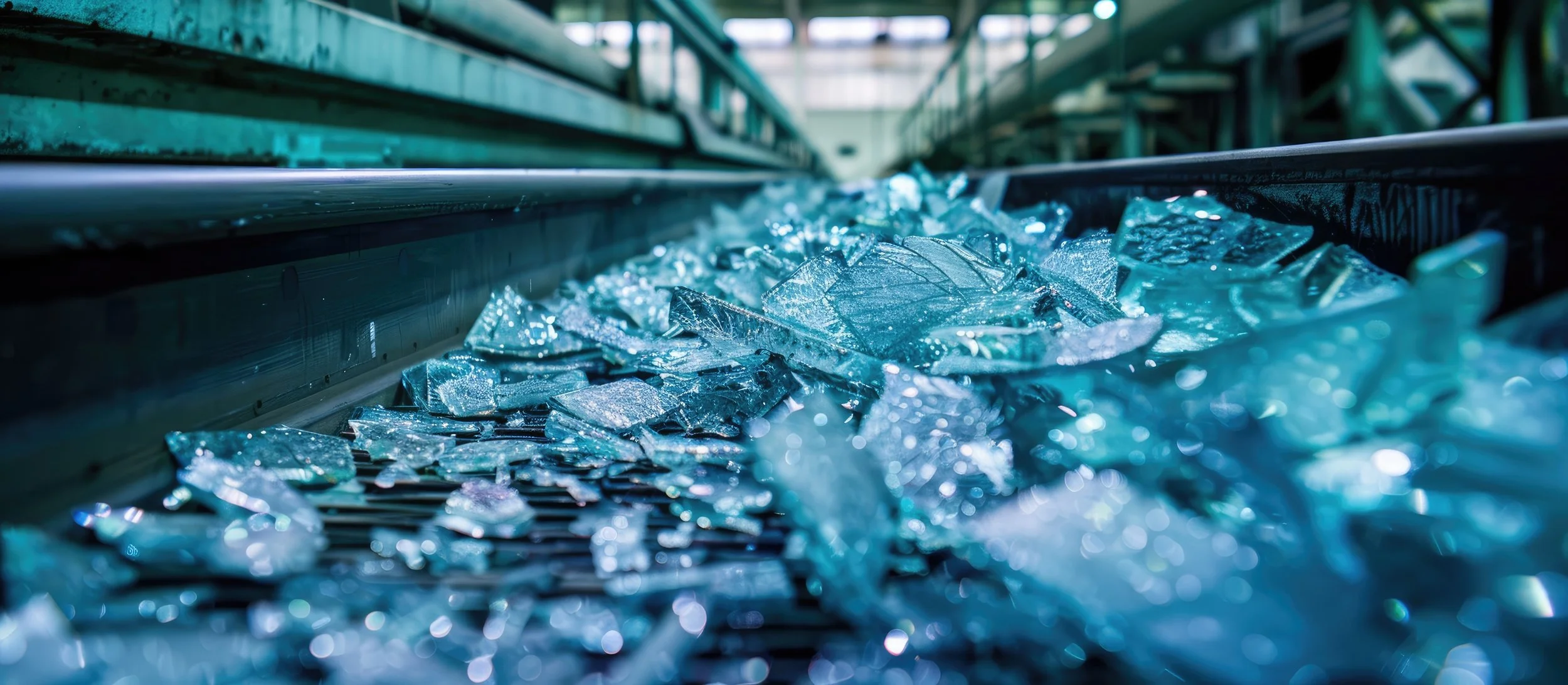
Recycled Glass Applications
Green Recovery of Valuable Metals
Outcomes
This theme will deliver new applications and markets for recycled materials, ensuring that recovered silicon, glass, and metals are not wasted but transformed into high-quality inputs. Outcomes include solar panels manufactured with recycled content, greener construction materials, and sustainable metal recovery routes that replace conventional, carbon-intensive metallurgy. By closing the loop, RT3 strengthens the economic case for PV recycling and supports a truly circular renewable energy sector.

RT 3.1 Recycled Silicon (Si) Applications
P16: Reusing recycled silicon in new solar panel manufacturing.
P17: Using recycled silicon in steelmaking and concrete industries.
Remarks from preliminary work
He, C., Zhuo, Y. & Shen, Y. (2026) separates a PV-cell fraction for silver leaching, while Deng, R., Zhuo, Y. & Shen, Y. (2022) identifies the need for end-use markets for recovered materials; together, these findings support a task to qualify the recovered silicon for reuse.
Song, S., Zhuo, Y., Li, Q. & Shen, Y. (2024b) informs RT 3.1 by establishing a processing route that preserves substrate integrity, outputting clean, Ag-free silicon feedstock for value-added reuse in manufacturing and steelmaking.
Song, S., He, C., Zhuo, Y., Yue, Y. & Shen, Y. (2023) shapes RT 3.1 by defining the upstream crushing/milling size windows required to prevent Ag contamination, ensuring high-grade silicon is delivered for product conversion.
RT 3.2 Recycled Glass Applications
P18: Reusing recycled glass in new solar panel production.
Remarks from preliminary work
Deng, R., Zhuo, Y. & Shen, Y. (2022) identified secondary markets and end-use applications—particularly for glass—as an unresolved need alongside material recovery.
Chowdhury, H., Chang, N. L., Song, S., Xie, Z., Zuo, J. & Shen, Y. (2026) showed that removing glass revenue from the laser-recycling case reduced its estimated NPV by about 44%, making glass-market validation relevant to the economic case for recycling.
RT 3.3 Green Recovery of Valuable Metals
P19: Recovering valuable metals through reduction processes.
P20: Using bio-engineered methods to precipitate and recover metals sustainably.
Remarks from preliminary work
He, C., Zhuo, Y. & Shen, Y. (2026) reported over 98.9% silver recovery after separation and leaching, providing a performance benchmark for the metal-recovery task.
Song, S., Zhuo, Y., Li, Q. & Shen, Y. (2024b) showed how CSTR impeller design affects leaching and AgNO₃ distribution, supporting a controllable silver-bearing leachate for downstream separation. The study is bench-scale and does not demonstrate downstream silver precipitation.
Song, S., He, C., Zhuo, Y., Yue, Y. & Shen, Y. (2023) linked particle size to silver-leaching performance, identifying fine-particle feed as a route to higher recovery efficiency.
Yue, Y., Zhuo, Y., Li, Q. & Shen, Y. (2022) discovered that reactor scale-up can reduce leaching efficiency if operating conditions are simply held constant, informing scale-up requirements for silver extraction.